7 Signs Your Fuel Tank Needs Cleaning
- Garrett Trethewey

- May 8
- 6 min read
A fuel problem rarely starts with a full shutdown. More often, it starts with a filter change that comes too soon, a generator that hesitates under load, or a vessel that suddenly runs rough on fuel that looked fine on paper. Those small issues are often the first signs your fuel tank needs cleaning, and catching them early can save far more than the cost of maintenance.
For commercial operators, stored fuel is not just inventory. It is part of the reliability plan. When a tank begins collecting water, sludge, microbial growth, or sediment, the contamination does not stay neatly at the bottom forever. It moves through the system, affects combustion, shortens filter life, and puts pumps, injectors, and engines under unnecessary stress. That is why tank cleaning is not cosmetic work. It is operational protection.
Why fuel tanks get dirty in the first place
Even well-managed fuel systems can develop contamination over time. Water enters through condensation, loose seals, venting, or delivery issues. As fuel ages, oxidation can create gums and varnish. Dirt and rust can enter during transfers or build up inside older tanks. In diesel systems especially, water creates the conditions for microbial growth, which leads to biomass and acidic byproducts.
The pace of contamination depends on the fuel type, storage conditions, turnover rate, and tank construction. A backup generator tank that sits for long periods faces different risks than a fleet fueling tank with regular cycling. Marine environments add another layer because moisture exposure is harder to avoid. The point is simple - a tank does not have to be neglected to develop a cleaning problem.
7 signs your fuel tank needs cleaning
1. Filters are clogging more often than usual
If your team is replacing filters on a shorter cycle than normal, that is one of the clearest warning signs. Filters are designed to catch contamination before it reaches sensitive equipment, but when they begin loading up too quickly, something upstream is feeding the problem.
This often points to sediment, sludge, microbial debris, or fuel breakdown products in the tank. Repeated filter changes may keep equipment running for a while, but they do not solve the source. If the tank is contaminated, fresh filters simply become the next sacrifice.
2. Equipment performance is becoming inconsistent
Hard starts, rough idling, power loss, injector issues, and unexpected shutdowns can all trace back to poor fuel quality. In many cases, the equipment itself gets blamed first. Operators may inspect pumps, engines, or controls before considering the tank.
That is understandable, but contaminated fuel creates symptoms that look like mechanical failure. When solids and water move through the system, combustion quality drops and fuel delivery becomes less consistent. If performance issues are showing up across multiple assets drawing from the same tank, the tank deserves immediate attention.
3. You find water in the fuel system
Water is one of the most damaging contaminants in stored fuel. It contributes to corrosion, encourages microbial growth, and reduces fuel quality. If water shows up in sampled fuel, separators, filters, or tank bottoms, it is a sign that your storage conditions need more than monitoring.
A small amount of water may sometimes be handled through routine water removal, but recurring water presence usually signals a larger maintenance issue. The question is not only how much water is there. It is also how long it has been there and what it has already allowed to develop inside the tank.
4. Fuel samples look dark, hazy, or dirty
A clean fuel sample should not raise questions. If it appears cloudy, contains visible particulates, shows a darkened color, or has a layered look, there is likely contamination in the tank. Visual inspection is not a complete diagnosis, but it is often an early warning that the fuel has changed.
Hazy fuel can indicate suspended water. Dark fuel may suggest oxidation, sludge, or biological contamination. Debris in the sample points to sediment, rust, or deteriorating tank conditions. If the sample does not look stable and clean, there is a reason, and ignoring it usually makes cleanup harder later.
5. There is sludge or microbial growth in the tank
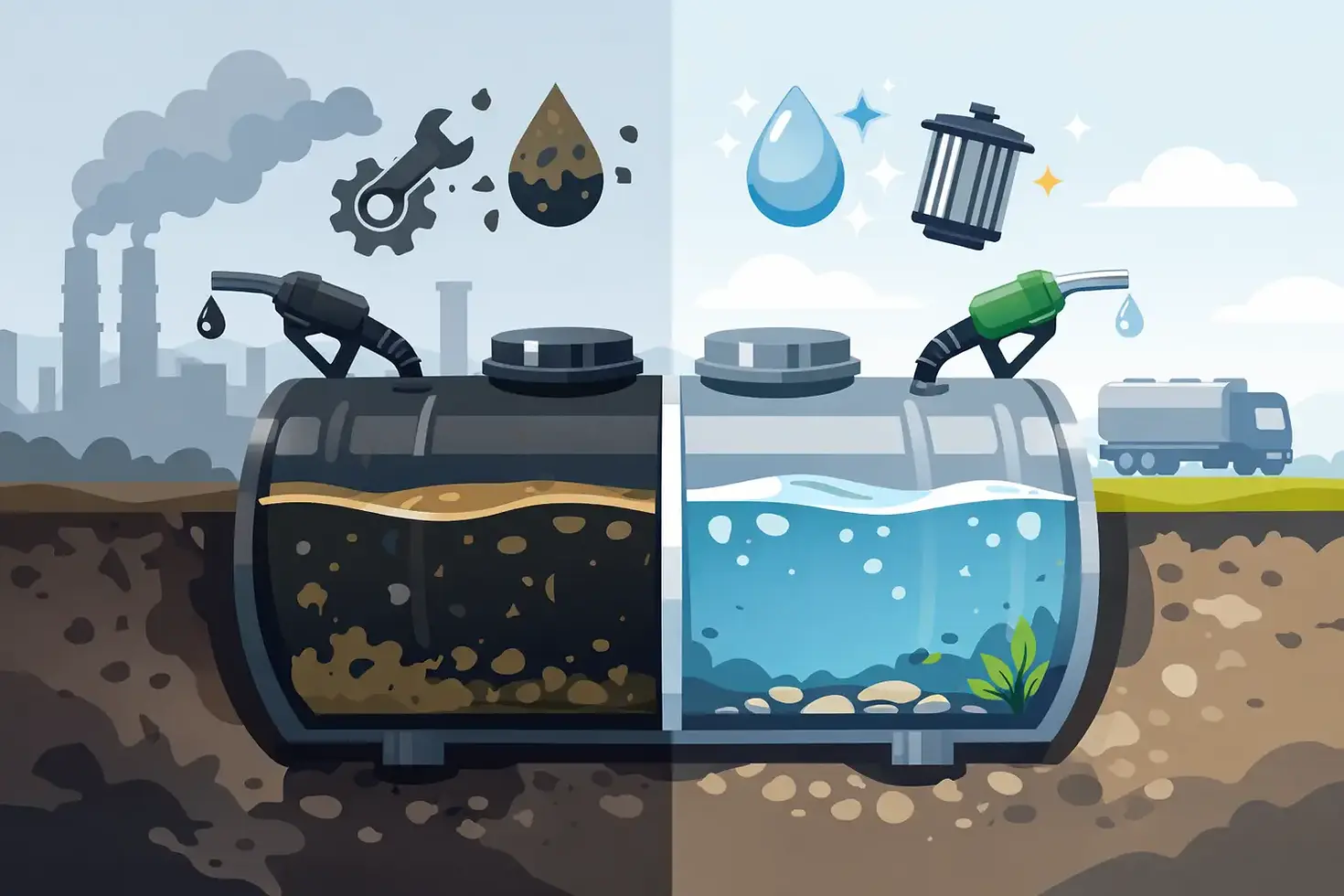
Sludge at the bottom of a tank is more than an inconvenience. It is a concentrated contamination zone made up of dirt, degraded fuel, water-related byproducts, and sometimes microbial material. Once that layer builds up, normal fuel movement can disturb it and send contaminants into circulation.
Microbial growth deserves special attention in diesel storage. Bacteria and fungi live at the fuel-water interface, and as they multiply, they create biomass that clogs filters and acids that can damage tank surfaces. If inspections or sampling show sludge, biofilm, or suspected microbial activity, cleaning should move up the priority list quickly.
6. Your tank has been in service for years without cleaning
Time matters, even when no obvious breakdown has happened yet. Many tanks continue operating while contamination accumulates gradually enough that the warning signs are easy to normalize. A little more sediment here, a few more filter changes there, one unexplained performance issue every few months - it adds up.
If your tank has stored fuel for years without professional cleaning, especially in standby, seasonal, marine, or bulk storage applications, there is a good chance hidden contamination is already present. Preventive cleaning is often less disruptive and less expensive than waiting for a failure event to force the decision.
7. You are dealing with unexplained maintenance costs or downtime
When fuel-related problems keep showing up as scattered expenses, they are easy to misclassify. One service call might be logged as an injector issue, another as a starting problem, another as a filter replacement. But if those costs continue around the same equipment or fuel source, the storage system may be the common denominator.
This is one of the most costly signs your fuel tank needs cleaning because it tends to stay hidden in plain sight. Businesses absorb the downtime, pay for parts, and move on, while the contaminated tank continues creating repeat problems. Looking at the whole fuel path, not just the last failed component, usually tells a clearer story.
When cleaning is urgent and when it can be planned
Not every tank issue requires an emergency response, but some do. If fuel contamination is actively disrupting operations, causing repeated shutdowns, or threatening a mission-critical asset like a generator, marine engine, or fleet fueling system, waiting creates more risk. The same is true if heavy water intrusion or confirmed microbial growth is present.
In other situations, cleaning can be scheduled as part of a broader maintenance plan. For example, if sampling shows early contamination but equipment is still stable, there may be time to coordinate cleaning around operations. That said, planned action is still action. A manageable contamination issue can become urgent faster than many operators expect.
Why tank cleaning is different from a temporary fix
Additives, filter changes, and water draining all have their place, but they are not substitutes for removing accumulated contamination from the tank itself. If sludge, sediment, and microbial debris remain in place, the system continues to be at risk every time fuel is moved or levels change.
Professional tank cleaning addresses what is actually inside the tank, not just what has already reached the equipment. In many cases, fuel polishing may also be part of the solution, especially when the goal is to restore fuel quality while removing suspended contaminants and water. The right approach depends on tank condition, fuel age, contamination severity, and how critical the fuel supply is to your operation.
What smart operators do next
The most effective response is not guesswork. It starts with inspection, sampling, and an honest assessment of the tank’s condition. From there, you can decide whether the system needs cleaning, polishing, corrective treatment, or a more complete maintenance plan.
For businesses that depend on stored fuel, the real objective is not simply to clean a tank once. It is to reduce downtime, protect equipment, and avoid preventable failures. That is the standard Clear Fuel Solutions works toward every day.
If your fuel system has started sending mixed signals, it is worth paying attention now while the problem is still manageable. Clean fuel supports reliable operations, and reliability is easier to keep than it is to rebuild.


Comments